

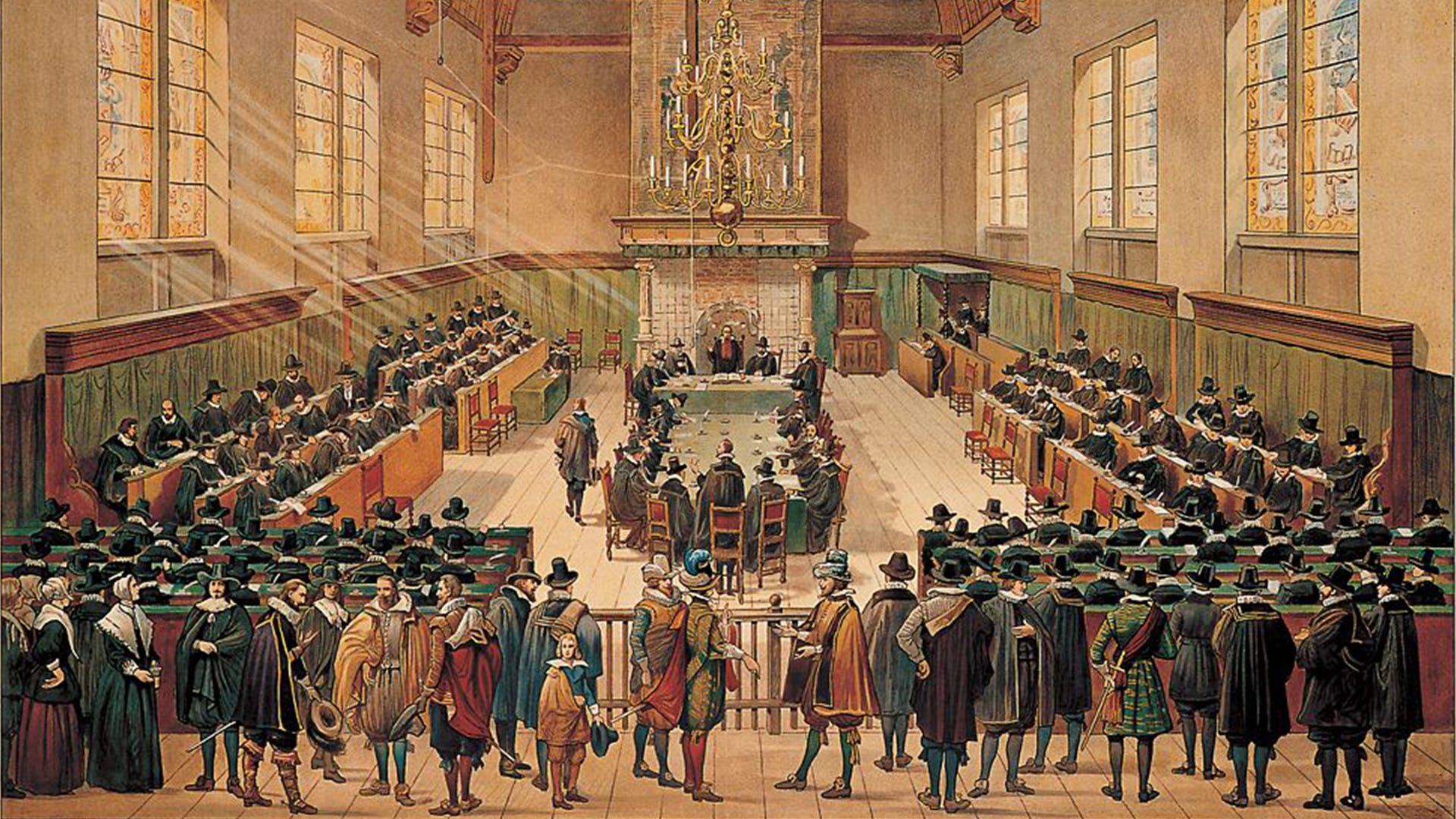
As I survey the landscape and evaluate the conversations I see, and the critiques I hear, I think there is a major problem that exists in the reformed world, that has, for a long time, been praised as a bulwark against error, but, in this time of reformation, is now being shown to be a crutch hindering the biblical progress in the unity and peace of the church. And the issues (as I see it) is this: the over-reliance on the confessional standards of the church as doctrinal dogma, rather than a joyful appreciation of them, for the assistance they give, while adamantly insisting that the bible is the actual and only rule of faith and life. This may seem broad, but let me explain.
Analysis
Whether those in the reformed world want to admit it or not, there is a persistent view that the Westminster Confession of Faith (for instance), and the declarations of the church at its synods, general assemblies, councils, and conventions are just as authoritative as the scriptures. There will be an insistence that because the elders of the church hold the “keys to the kingdom” they are somehow able to make determinations nowhere delineated from scripture, yet claim that the 5th commandment demands that congregants obey them, or be brought under discipline - which is a pity because all authority is derivative.
Those two things, however, – our confessions and official declarations of the church – become either just as authoritative, or more authoritative (depending on the situation), over time, than the scriptures themselves. What has occurred since the reformation, is the overthrow of a singular pope for a pope in plurality. The plurality of the divines, and the plurality of the elders have each been determined to have more authority than the word of God.
This reality is displayed brightly in the persistent onslaught of certain reformed folk taking aim at faithful and reformed men like James Jordan, Doug Wilson, or Peter Leithart, to name a few. Take for instance a phrase by Peter Leithart. Leithart says, “[Justification] and definitive sanctification are not merely simultaneous, nor merely twin effects...rather, they are the same act.” Now, because this language does not mirror closely enough the language of the Westminster Larger Catechism Question 771, it is dismissed out of hand and regarded as heresy by many. In other words, when Leithart says something that is both challenging, and outside the allowable linguistic box of the confessions – although it may square with scripture – it is regarded as heretical. Not tantamount to it, but actual heresy. This isn’t because it contradicts scripture, but rather because it may contradict the theology that they believe accurately represents the scriptures reflected in the confessional standards of the church, which in effect makes the theology as authoritative as the scripture.
To expound on the example above. The Westminster standards know nothing about definitive sanctification, but only what we might call progressive sanctification – that life-long process of growing in holiness. Rather than extend charity and brotherly courtesy when reading Leithart in context and understanding what he (a theologian) is trying to say, there is an urge to immediately dismiss any theological formulation immediately out of hand if it seems to go against the standard and acceptable ways of speaking. When church leaders do this, it undermines their credability and leadership, and their parishioners are not blind to it. Would you tell your children no candy before bed, while you sneak some yourself? This is what staunchly “reformed” pastors are doing, and their congregations are watching and saying, “that doesn’t seem fair.”
Legalism in action
When these arguments are made, we are seeing legalism in action. When the applications of, or safeguards around the law become the new law, that is legalism. So, when the confessions and church traditions have supplanted the scripture as to what the standard is, then we have legalism, and we blur the lines nearing cultism. This is dangerous ground to walk upon. When Eve said to Satan that her and Adam were not to eat from the tree nor touch it, that was legalism. God never said not to touch the tree. That was a rule by Adam placed on top of a rule given by God so that – in his own strength – he might prevent anyone from eating it. Therefore, by placing the confessions as a liner, and outer shell, an additional barrier around the scriptures we have a subtle, and regrettably acceptable form of legalism.
We are in the middle of a reformation in the west, in which the old (currently existing) school is battling to maintain their power and ground, but they are ready to burst. And the new school (new wine skins), are going to take over one way or another, because the church must continue to plumb the depths of scripture further and further. Martin Luther explained his involvement in the reformation this way: “I simply taught, preached, and wrote God’s Word; otherwise I did nothing. And while I slept, or drank Wittenberg beer with my friends Philip and Amsdorf, the Word so greatly weakened the papacy that no prince or emperor ever inflicted such losses upon it.”
Conclusion
How do we combat this problem faced by the church today? We appreciate the confessions as they were meant to be appreciated. Not as another testament, but as a help. Not as words etched in stone, but as fallible words written by fallible men. We should hold to the confessions honestly, not strictly. And we ought to embrace the mentality of the reformer himself – Martin Luther. We each, preach, teach, and write, and trust that the Gospel and the word of God to win the day. The truth of God’s word can’t but win. This means that as the scripture are obeyed and faithful men are continually slandered and the “faithful” slip in fidelity, their errors will become evident to all. If the CREC is a movement of God, then it cannot be stopped, and they may even find themselves opposing the work of the Lord.
Q. 77. Wherein do justification and sanctification differ?
A. Although sanctification be inseparably joined with justification, yet they differ, in that God in justification imputeth the righteousness of Christ; in sanctification his Spirit infuseth grace, and enableth to the exercise thereof; in the former, sin is pardoned; in the other, it is subdued; the one doth equally free all believers from the revenging wrath of God, and that perfectly in this life, that they never fall into condemnation; the other is neither equal in all, nor in this life perfect in any, but growing up to perfection.