

On The Adaptation of Paganism to Christianity
“Take care that you be not ensnared to follow them… You shall not worship the LORD your God in that way… Whatever I command you, you shall be careful to do. You shall not add to it or take from it.”
— Deuteronomy 12:30–32
Introduction
In a previous article, which you can read here, I showed concretely that the history of Halloween is pagan and that the Roman Catholic communion attempted to co-opt it for the sake of Christianizing paganism, which is not possible. I did this because many men, notably James B. Jordan, are fond of claiming that this history is dubious and a 19th-century invention. This is patently absurd and foolish, as was made clear.
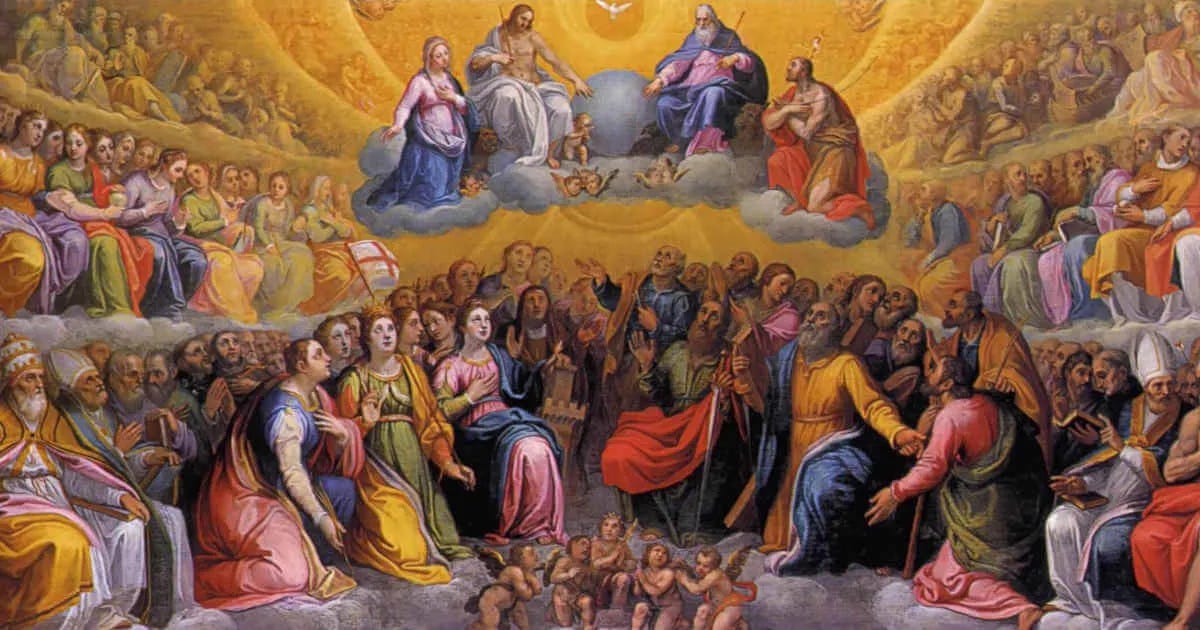
In the 9th century, Rome invented All Hallows’ Eve as the evening preceding All Saints’ Day. I say invented, because until that time, All Saints Day, which was created in the 7th century, was observed on May 13th. As Roman Catholicism spread over the world, it incorporated and renamed Samhain to create the vigil for All Saints’ Day, which became known as All Hallows’ Eve. Therefore, Rome moved the celebration of All Saints Day to November 1st for the entire Roman communion in this syncretistic attempt.
Nevertheless, it seems that this topic still requires some attention, and so that’s what I will do here—give it more attention. There are still some outstanding arguments and outrageous claims that deserve a countervailing voice because they are incorrect and will lead people astray, not only from the truth, but also from the Lord, through a gross misunderstanding of His Word. Therefore, I will be addressing an article written by Pastor Joseph Abrahamson in 2014, titled: Redeeming Holy Days from Pagan Lies: All Saints’ Day/Eve and Samhain.
The Spirit of Borrowed Worship
It is a curious thing that modern Christians, who live with a Bible in nearly every room of their homes, continue to defend the observance of Halloween on the grounds that it merely “redeems” the paganism and/pr honors the memory of Catholic martyrs. In his article, Pastor Joseph Abrahamson argues precisely this: that All Saints’ Day is not derived from paganism but instead sanctifies the day for Christian reflection.
But this defense—common among even conservative Lutherans and some Protestants—misses the greater biblical question. The issue is not primarily historical but theological. Even if one could prove beyond all dispute that All Saints’ Day predates any pagan parallel—which isn’t possible due to Rome’s own record of Pope Gregory III’s actions—that would not justify its observance. The question is not where a practice came from but whether God commands it. Scripture, not tradition, must determine how God is to be worshiped in all of life. And in that light, Abrahamson’s argument collapses under its own weight.
The Word of God does not permit the Church to invent holy days, baptize pagan customs, or add to the pattern of worship ordained by Christ. What is at stake here is not calendar preference but covenant faithfulness.
The Biblical Problem with Redeemed Paganism
The first error of Abrahamson’s defense lies in his assumption that “redeemed” pagan customs may be safely incorporated into Christian life. He makes this argument at the beginning of his article, yet with no biblical qualifications for it. He simply states, “A read through the Old Testament will show that the people of God have many times adopted religious practices and celebrations from the pagan nations around them.” This is a true statement, but it is (and I’ll attribute motive because he’s a pastor and should know better) a deliberate misrepresentation of the data to skew his way and deceive the reader. He says Israel adopted these practices “in an effort to gain peace with those nations, sometimes to attract members, sometimes so they could fit in better with surrounding nations, sometimes in outright rebellion to God.” None of this is true. In fact, it’s a damnable lie. Literally! Yes, Israel did adopt the practices of surrounding pagan nations, but this was always to their own detriment. God’s law is clear:
“Take care that you be not ensnared to follow them… You shall not worship the LORD your God in that way.”
Deuteronomy 12:30–31
“You shall not do as they do in the land of Egypt, where you lived, nor shall you do as they do in the land of Canaan, which I am bringing you to. You shall not walk in their statutes”
Leviticus 18:3
“For I am the Lord your God. You shall therefore consecrate yourselves, and you shall be holy; for I am holy...”
Leviticus 11:44
Abrahamson then has the audacity to claim that “The Acts of the Apostles, their Epistles, and the book of Revelation also show various ways that the Church adopted the cultural and religious practices of the pagans around them.” It’s like dejavoo; his blunders will not quit! The New Testament continually warns Christians against conforming to worldly patterns that contradict God’s teachings not adopting or adapting.
“And do not be conformed to this world, but be transformed by the renewing of your mind, that you may prove what is that good and acceptable and.”
Romans 12:2
“For all that is in the world—the lust of the flesh, the lust of the eyes, and the pride of life—is not of the Father but is of the world.”
1 John 2:16
“But as he who calls you is holy, you also be holy in all your conduct, because it is written, ‘be holy for I am holy’”
1 Peter 3:15-16
God’s people were forbidden to study or imitate all forms of paganism, be it political, cultural, ceremonial, covenantal, or sacrificial, even with good intentions. Consider the occasion of the golden calf of Exodus 32. Aaron did not declare allegiance to Baal; he proclaimed a “feast to the LORD.” Yet the Lord called it idolatry, because the people presumed to honor Him through an image and a festival of their own making.
This is precisely the logic behind all syncretistic holy days. “We are not worshiping false gods,” one says, “but the true God, only with different forms.” “We’re not worshiping demons, but merely mocking them.” But the Lord answers, “You shall not worship the LORD your God in that way.” The biblical pattern is absolute: God’s people are not improved by the imitation of the nations, but are only and forever profaned by it (2 Kings 17:33–34).
The pagan roots of Halloween or Samhain are, therefore, not the decisive issue, although they are mightily important. But even if they were irrelevant, the creation of All Saints’ Day would still offend the principles of scripture. For even with this, we are forbidden from praying to the dead (Deuteronomy 18:10-12), or for looking for anyone but Christ to mediate for us (1 Timothy 2:5), each of which All Saints Day is meant for. It is, in other words, impossible—hear me **IMPOSSIBLE**—to observe this holiday in a vacuum. It is attached to something—either a demonic pagan practice or a demonic Papist practice.
The Church may not “baptize” what God has forbidden, nor supplement what He has prescribed—and he has prescribed our holiness. To argue otherwise is to reopen the door to every idolatrous impulse under the name of cultural redemption. Rather, we are commanded to take the culture by teaching what Christ has commanded, not adopting the practices of the world.
The Absence of Apostolic Precedent
A second failure in Abrahamson’s defense is his reliance on post-apostolic tradition as the basis for this churchly holy day. It is perfectly obvious that the New Testament church knew nothing of a liturgical calendar beyond the Lord’s Day. The pattern of worship established by the apostles was simple:
“They devoted themselves to the apostles’ teaching and the fellowship, to the breaking of bread and the prayers.”
Acts 2:42
There were no annual feasts commemorating the saints, no ecclesiastical year dividing Christ’s work into ceremonial observances. Now, I’m not arguing that it is irrelevant or impure for the church to establish holidays in which we commemorate the new acts of God in Christ Jesus our Lord. In Esther 9, we see the establishment of Purim as a celebration of God’s deliverance from their enemies, which for them was a new act.
“But the Jews who were at Shushan assembled together on the thirteenth day, as well as on the fourteenth; and on the fifteenth of the month they rested, and made it a day of feasting and gladness. Therefore, the Jews of the villages who dwelt in the unwalled towns celebrated the fourteenth day of the month of Adar with gladness and feasting, as a holiday, and for sending presents to one another. And Mordecai wrote these things and sent letters to all the Jews, near and far, who were in all the provinces of King Ahasuerus, to establish among them that they should celebrate yearly the fourteenth and fifteenth days of the month of Adar, as the days on which the Jews had rest from their enemies, as the month which was turned from sorrow to joy for them, and from mourning toa holiday; that they should make them days of feasting and joy, of sending presents to one another and gifts to the poor.”
Esther 9:18-22
But notice what this holiday isn’t: it isn’t an amalgamation of different religious and national beliefs to try and win others to be Jews. It was a novel celebration for God’s people to commemorate this glorious act of God.
It is also true, however, that in the church age, the Lord’s Day itself is the only Christian holy day sanctioned by scripture for the commemoration of the finished work of Christ every week (Revelation 1:10). This does not mean that we cannot, as the church, devise days in which we commemorate our Lord, following the example of our forefathers (namely Mordechai) but it must be biblical and it must not be syncretistic. Indeed, God commands that it must not be mixed with any other religious practice.
“What harmony is there between Christ and Belial? Or what does a believer have in common with an unbeliever?”
2 Corinthians 6:15
This passage is about Christians being unequally yoked with those who reject Christ, which pagans and Romanists do. The verse highlights the radical, total incompatibility between Christ and Belial. The two are in complete, utter, and total opposition, just as light is the exact opposite of darkness. There can be no partnership, no agreement, and no harmony between them. Whatever. Believers are called to align with Christ and separate themselves from the world’s wickedness, which is allegorically represented by Belial.
The Dangers of Historical Romanticism
Abrahamson’s essay appeals not primarily to Scripture but to church history. He argues that because early Christians celebrated All Saints’ Day independently of paganism, the day should be received as legitimate. However, it is the scripture that is the final arbiter in all debate. Additionally, his reasoning is identical to Rome’s defense of nearly every other error of tradition: “The Church has long done this; therefore, it is good.” So just press the “I believe” button, you Christian!
The Reformers rejected this logic outright. Antiquity is an authority, but it is not ultimate; this is evident in the myriad errors of the early church during the first several centuries. The appeal to age is meaningless if the practice itself contradicts Scripture. As Calvin wrote, “Whatever is not commanded in the Word, even if it has the appearance of wisdom, is nothing but the vanity of men.”¹
Moreover, Abrahamson’s historical argument confuses causation with sanctification. Even if Rome invented All Saints’ Day in deliberate contrast to paganism, it still invented what is in stark contradiction to scripture. History cannot cleanse what Scripture forbids. The Pharisees, too, claimed historical precedent for their traditions; Jesus’ answer was simple: “In vain do they worship Me, teaching as doctrines the commandments of men” (Mark 7:7).
This is not a minor matter of liberty, indifference, or reasonable disagreement. The moment the church claims divine approval for a man-made observance which is fundamentally contrary to scripture, it teaches a false doctrine for the Christian life, which life is—as you’ll recall—meant to be offered up to God as an acceptable sacrifice (Romans 12:1-2).
Conclusion: The Saints Need No Feast
All Saints’ Day is not the celebration of the saints—it is the celebration of man’s presumption. The saints of Scripture never sought to be remembered with liturgical pageantry; the saints of now are never instructed to pray to or for those who have fallen asleep; the scriptures never instruct us to seek plenary indulgences to bounce doomed souls out of purgatory. All the saints of scripture sought only to be forgotten that Christ might be glorified. Their legacy is preserved not in dates on a calendar but in doctrine.
If the Church desires to honor the faithful departed, let her do so by continuing steadfastly in the apostles’ teaching, by keeping the Lord’s Day holy, making Christian holiday Christianly, and by proclaiming the gospel that made those saints, saints. That is the only biblical remembrance.
And bear with my reiteration. It is impossible to practice anything in a vacuum. All things have meaning, and it is impossible to divorce one’s practices from meaning by pure declaration. Participating in Halloween is, as I have argued already, either pagan to the core, Roman Catholic to the core, or secular to the core. This “holiday” cannot be redeemed for it is not doomed because of its meaning. Better would be the approach to do something on the same day that is entirely different and actually Christian. Not engaging in Halloween customs like dressing up, trick-or-treating, glorifying death, or looking for scares. But why not Christian fellowship, the singing of Psalms, feasting with the saints, wholesome Christian fun, and giving thanks to God for all things?
We do not need to redeem pagan days; Christ has already redeemed us. Our task is not to sanctify paganism, but to uproot it with the obedience of faith being taught to all nations, and to sanctify ourselves in obedience to the Word. For it is written:
“Come out from among them, and be separate, says the Lord, and touch no unclean thing; then I will welcome you.”
2 Corinthians 6:17
¹ Institutes of the Christian Religion, 4.10.23.