

“For you know the grace of our Lord Jesus Christ, that though He was rich, yet for your sake He became poor, so that you by His poverty might become rich.” (2 Corinthians 8:9)
Coming to the Lord’s Table during the season of Advent, we are invited to contemplate not a sentimental scene, but a staggering grace. Advent does not merely prepare us to remember a birth; it trains our hearts to behold a descent. The eternal Son, rich beyond measure, clothed in unapproachable light, did not cling to His riches. For our sake, He became poor. And in that poverty, He has made His people rich.
Paul’s words in 2 Corinthians 8:9 are not a poetic flourish, nor a vague metaphor. They are a theological summary of the gospel itself. Christ’s riches are not measured in material abundance, nor is His poverty defined by economic deprivation alone. Rather, the apostle is drawing our attention to the great exchange at the heart of redemption: the Son of God, possessing all glory, honor, and fullness of divine life, and perfect fellowship with the Father and Spirit, willingly entered into our low estate—assuming our nature, bearing our curse, and embracing our need—so that we, who were spiritually bankrupt, might receive the wealth of salvation, riches, and fellowship.
This is the mystery Advent sets before us. The One through whom all things were made took on flesh. The Lord of glory learned obedience in suffering. The Bread of Heaven entered into hunger. The Fountain of living water entered into thirst. He who lacked nothing chose a life marked by dependence, weakness, rejection, and finally death. And, He did not do this in an abstract or impersonal manner. Paul is careful to say, “for your sake.” This poverty was deliberate, covenantal, and particular. It was undertaken for His people, for you, His brothers and sisters, His bride, His friend.
At the Lord’s Table, we are brought to the intersection of Bethlehem and Golgotha. Here, the cradle and the cross touch. Here, the humility of the incarnation and the obedience of the crucifixion are held together as one saving work. At this Table, heaven’s throne and death’s tomb meet. The same Christ who was laid in a manger is the Christ whose body was broken and whose blood was poured out. Advent reminds us how far He came; the Supper reminds us why He came.
The riches He gives us through His poverty are not fragile or fleeting, nor are they for the special and strong. They are not measured in gold or silver, but in gifts that cannot corrode or be taken away. In Christ, we are forgiven—fully, finally, and freely. Every stain of guilt is covered by His blood. Every accusation against us has been silenced by His righteousness. We are not merely pardoned criminals; we are adopted children. We have been brought into a family that death itself cannot dissolve, given a name that cannot be revoked, and promised an inheritance that is kept for us in heaven.
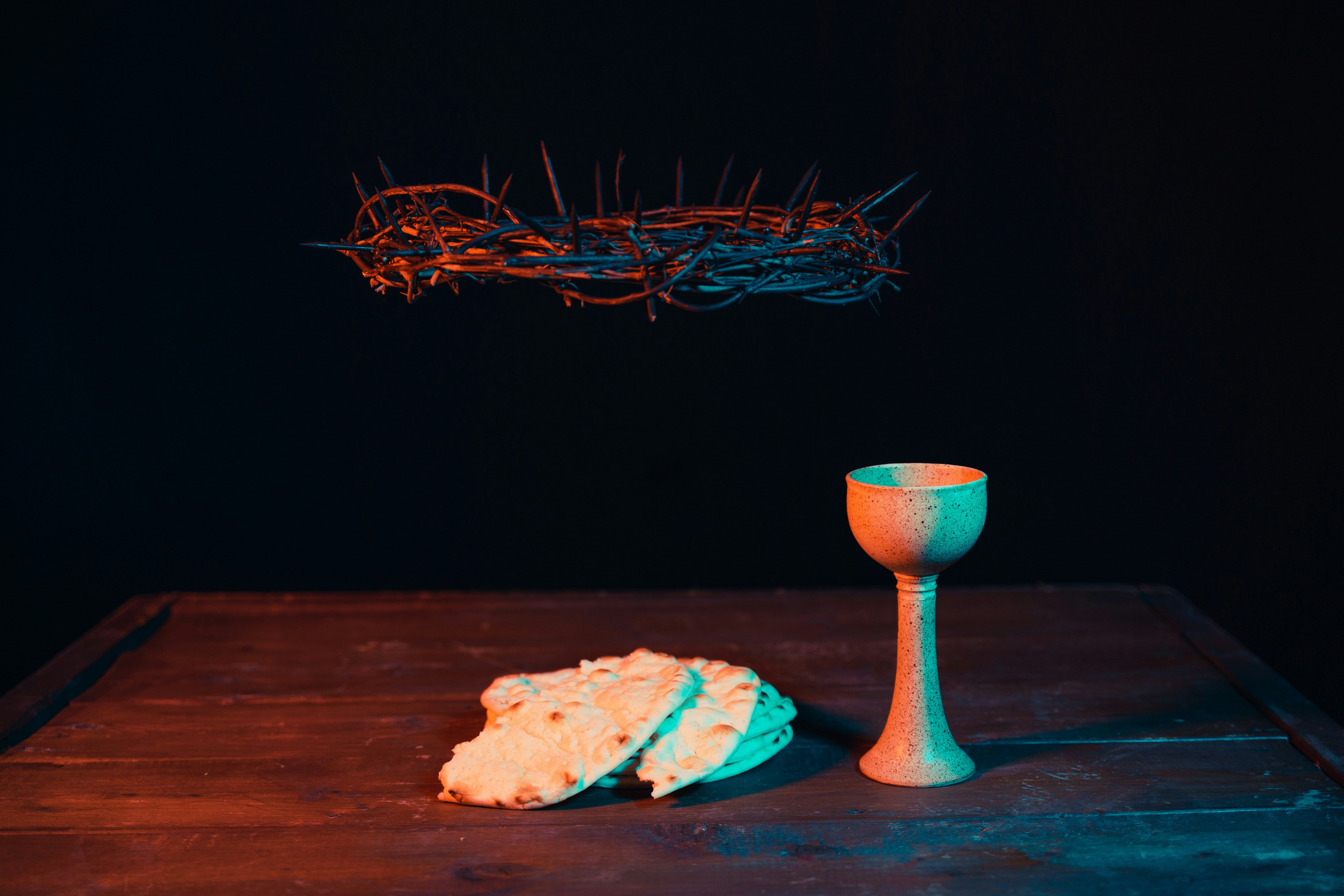
At the Table, these riches are not only proclaimed; they are applied. The bread tells us that Christ entered our hunger. The cup of the new covenant tells us that Christ entered our thirst. He did not redeem us from a distance. He came all the way down into the depths of human need and bore it in His own body. And now, having passed through humiliation, cruelty, lowliness, and debasement, he has entered into exaltation. There He nourishes His people with strength that is not their own. By the power of His Spirit, He supplies what we lack and sustains us along the pilgrim road.
This is why the Lord’s Supper is not a reward for the strong, but is rather, food for the weak. We do not come because we are full, but because we are hungry. We do not come because we are rich in ourselves, but because we are poor and know it in our bones. Christ does not despise such poverty. He has sanctified it by entering into it Himself. He welcomes those who come with nothing to offer but open hands and empty hearts.
Advent teaches us to wait; the Supper teaches us that we are not abandoned while we wait. The King who once came in lowliness meets His people even now to sustain them until He comes again. He invites us to His feast and promises that His grace will be sufficient for every step between the first coming and the last.
So lift up your hearts. The One who became poor has made His people rich, and He will not cease to give Himself to them. Grace upon grace flows from the Christ who humbled Himself for our sake. He will sustain His church until the day when faith gives way to sight, poverty gives way to glory, and the feast begun at this Table is completed in the kingdom that has no end.