Interracial Marriage, Biblical Norms, and Christian Wisdom
Introduction
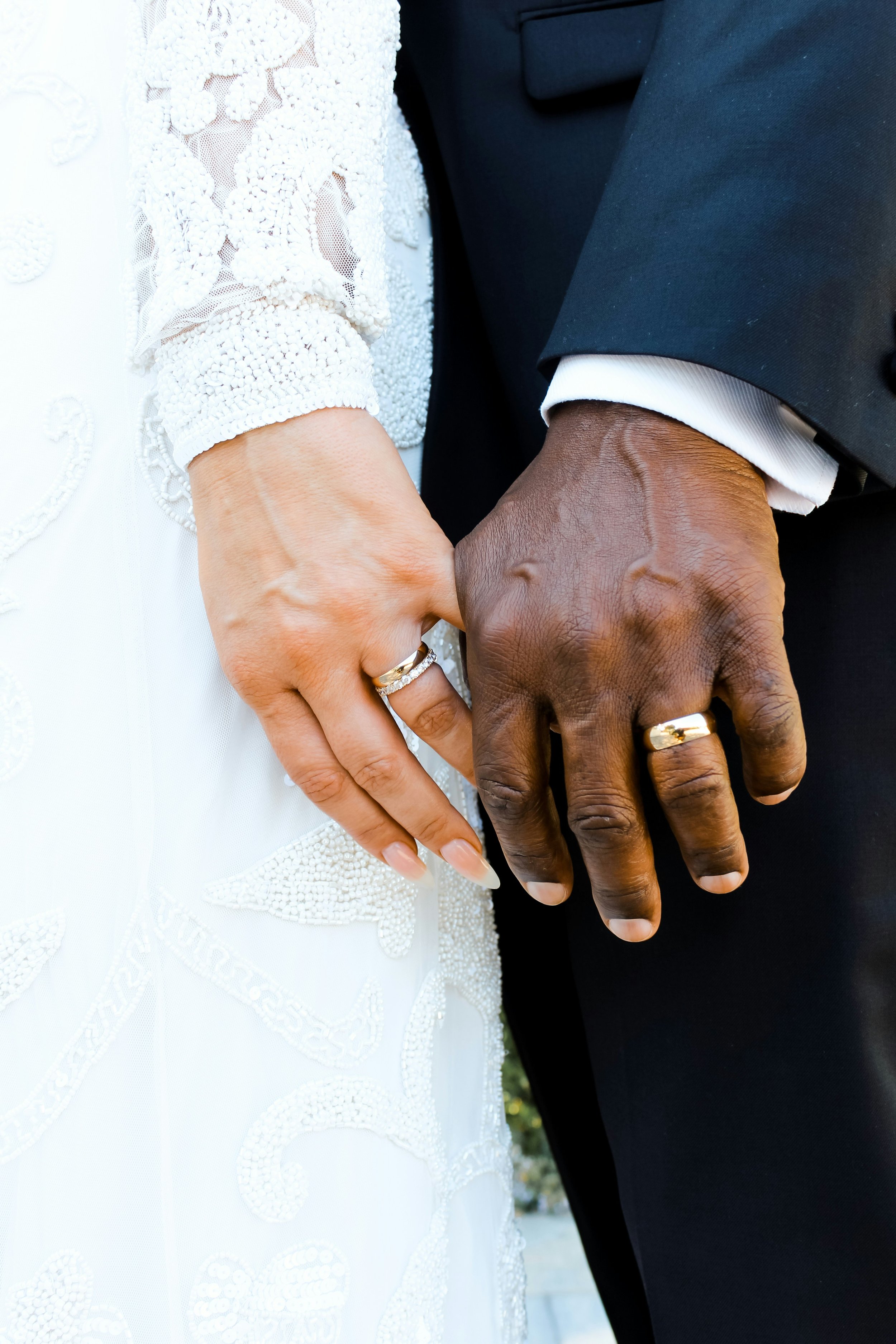
I write this as a man married to a wonderful, godly woman of a different ethnicity. My position, therefore, is not theoretical, detached, or reactionary. It is personal, pastoral, and biblical. Because of that, I believe Christians, especially those shaped by the Reformed and theonomic traditions, must be willing to speak honestly and carefully about marriage, norms, and wisdom, rather than allowing cultural pressure or sentimentalism to flatten meaningful distinctions.
We should also exercise greater charity toward brothers, such as Joel Webbon, who are saying things about interracial marriage that would not have sounded strange to Christians during the Reformation or the post-Reformation era. What strikes us as shocking today often does so not because it is unbiblical, but because our assumptions have been shaped by modern globalism rather than historic Christian categories.
With that said, I affirm that interracial marriage is lawful and permissible in Scripture. I also affirm that it is not normative and, in many cases, unwise. These two claims are not contradictory. They reflect the biblical distinction between what God allows and what God ordinarily blesses as a pattern for stability, continuity, and dominion. Scripture makes this distinction frequently, and so should we.
Normative Does Not Mean Moral Absolutism
Before proceeding, clarity is essential. To say that something is not normative is not to say that it is sinful in itself. Scripture regularly distinguishes between what is lawful and what is ordinary. The Bible contains many examples of practices that are permitted by God but not presented as the normal pattern of life: remarriage after a lawful divorce, marriage to a captive taken in war (Deuteronomy 21:10–14), adoption into another household or lineage, and even the unusual providence of a mother being paid by the state to raise her own child, as in the case of Moses’ mother (Exodus 2:9).
Biblical norms describe the ordinary paths God establishes and commonly blesses through creation and providence, while lawful exceptions are accounted for. Wisdom, therefore, requires us to recognize the difference between permission and pattern, between allowance and expectation. Wisdom literature especially operates in this category. Proverbs does not deal in exceptions; it deals in patterns.
When we speak of interracial marriage as non-normative, we are making a claim about ordinary providence, covenantal continuity, and practical wisdom, not issuing a blanket moral condemnation.
Unequal Yoking and the Community Marriage Creates
R.J. Rushdoony helpfully frames this discussion within the biblical doctrine of unequal yoking. In The Institutes of Biblical Law Vol 1, pg 260 he writes:
“Man was created in the image of God (Gen. 1:26), and woman is the reflected image of God in man… ‘Helpmeet’ means a reflection or mirror… indicating that a woman must have something religiously and culturally in common with her husband. The burden of the law is thus against interreligious, interracial, and intercultural marriages, in that they normally go against the very community which marriage is designed to establish.”
Rushdoony is not arguing that interracial marriage is intrinsically sinful. He is arguing that marriage is not merely a private affectional bond, but the creation of a new community, one that is meant to be stable, coherent, and dominion-oriented (Genesis 1:28; Psalm 128).
This principle is drawn directly from Scripture, “Do not be unequally yoked with unbelievers” (2 Corinthians 6:14). This yoke imagery comes from Deuteronomy 22:10: “You shall not plow with an ox and a donkey together.” The point is not about genetic superiority, but functional harmony. What is true agriculturally is a general principle.
Rushdoony continues:
“Unequal yoking is in no realm productive of harmony; rather, it aggravates the difference and delays the growth of the different elements toward a Christian harmony and association.
Notice also that Rushdoony is speaking in generalities: “normally”, not always. Wisdom speaks in probabilities, not absolutes. Scripture itself does the same.
God’s Providential Ordering of Peoples
Biblically, ethnic diversity is not a result of sin alone; it is part of God’s providential governance of history. Genesis 10 presents the Table of Nations, explicitly revealing to us that humanity was divided into: “their clans, their languages, their lands, and their nations” (Genesis 10:31–32). Remember they were to scatter abroad by command of God, but because they refused, He forced them to scatter at Babel (Genesis 11). This is later affirmed in Deuteronomy 32:8:
“When the Most High gave to the nations their inheritance… he fixed the borders of the peoples.”
Paul echoes this in Acts 17:26:
“He made from one man every nation of mankind to live on all the face of the earth, having determined allotted periods and the boundaries of their dwelling place.”
Ethnic distinctions, then, are not accidents of history. They are instruments of God’s providence, meant to restrain sin, preserve order, and cultivate cultural stewardship. The gospel does not erase these distinctions in this age. Rather, it redeems men within them. Revelation 7:9 does not show an undifferentiated humanity, but a glorified diversity worshipping God: “Every nation, from all tribes and peoples and languages.” Unity in Christ does not require sameness. It only requires faithfulness to Christ.
The Biblical Pattern of Marriage
When we examine Scripture, the overwhelming norm is intra-ethnic marriage.
Abraham insists Isaac not marry a Canaanite, but a woman from his own people (Genesis 24:3–4).
Isaac and Rebekah grieve Esau’s Hittite wives (Genesis 26:34–35).
Jacob is directed away from foreign wives toward his kin (Genesis 28:1–2).
The stated concern in these passages is religious faithfulness, but faith in the ancient world was inseparable from culture, household order, language, and law. Religion was not merely a set of beliefs; it was a way of life, which is still true today.
Ezra 9–10 and Nehemiah 13 address mixed marriages explicitly. While the primary issue is covenant faithfulness, the repeated historical lesson is that intermarriage often functioned as the entry point for apostasy. Scripture does not ignore that pattern. This is not racial animus. It is covenant realism.
Exceptional Cases and Assimilation
Scripture does present exceptional cases, most notably Moses and Ruth. Moses’ Cushite wife (Numbers 12) is defended by God against ethnic pride. Ruth, the Moabitess, is grafted into Israel and becomes an ancestor of Christ. But note what happens in both cases: assimilation through faith. Ruth explicitly abandons Moab: “Your people shall be my people, and your God my God” (Ruth 1:16). She does not create a hybrid covenantal identity. She is incorporated fully into Israel. These cases confirm the rule rather than overturn it: interracial marriage is permissible, but not normative, and when it succeeds, it does so through covenantal unity, not mere attraction or sentiment.
Practical Wisdom and Pastoral Sobriety
Marriage is difficult enough without adding unnecessary friction. Culture shapes communication, conflict resolution, expectations of family, views of authority, childrearing, hospitality, time, money, and honor. Ethnicity is not merely skin color; it is embodied culture passed down through generations. To pretend otherwise is not spiritual, it is naïve. Wisdom doesn't just ask, , “Can this be done?” but “Is this ordinarily wise?” the Bible repeatedly exhorts us to walk the well-worn paths, not the exceptional ones (Proverbs 22:28; Jeremiah 6:16).
Guarding Against Sinful Misuse
This position must be handled with great care and theological sobriety. Scripture unequivocally condemns ethnic pride, partiality, and contempt (James 2:1), and it insists that all who are in Christ share equal covenantal standing (Galatians 3:28). No ethnicity is naturally morally superior to another. All peoples are equally fallen in Adam, equally redeemable in Christ, and equally capable, by grace, of covenant faithfulness and obedience.
At the same time, biblical equality does not require historical amnesia. God’s redemptive kingdom advances through real peoples, real cultures, and real histories. In His providence, the light of the gospel has taken deeper and more sustained root in Western civilization than in any other region of the world. This is not a statement of intrinsic ethnic virtue, but of historical stewardship and responsibility. To whom much has been given, much is required (Luke 12:48). The Western church has been entrusted, for a time, with extraordinary theological clarity, institutional development, and cultural influence, not because of superior genetics, but because of sovereign grace working through particular nations and peoples.
This means that a Christian may rightly give thanks to God for the particular people, culture, and history into which he was born, without guilt or embarrassment. Gratitude for one’s own heritage is not the same thing as pride over others. In the ordinary course of God’s providence, it is therefore natural and wise for a white Christian man to desire marriage with a white Christian woman, just as it is natural and wise for believers of other ethnicities to desire marriage within their own people.
This preference does not arise from claims of ethnic superiority, but from the recognition that shared culture, history, and embodied ways of life ordinarily foster unity, stability, and continuity in marriage. Scripture consistently treats such shared givens as blessings, not burdens. What is ordinary need not be justified by ideology; it simply reflects how God commonly orders human life in families and nations.
To affirm this is not to deny Christian love across ethnic lines, nor to prohibit exceptional callings. It is simply to acknowledge that God’s ordinary patterns are good, and that walking in them requires neither apology nor animus, only gratitude and wisdom.
Conclusion
Interracial marriage is lawful. In and through Christ, I can testify that it is a real blessing. But it is not normative, and Scripture gives us ample reason to say so without embarrassment. God created nations. God orders peoples. God ordinarily blesses marriages rooted in shared faith, culture, and communal continuity. Exceptions exist, but they do not overturn the pattern.
Christ redeems men from every tribe and tongue, but He does not flatten creation to do it. Wisdom still matters, norms still guide us, and marriage remains not merely a private romance, but the foundation of covenantal communities under God.