
Take Up & Read
Search By Category
- Abolish Abortion 2
- Abraham 1
- Affliction 2
- Anthropology 1
- Atheism 1
- Baptism 1
- Biblical Counseling 8
- Calvinism 2
- Canon 2
- Children in Worship 1
- Christian Life 25
- Christian Nationalism 1
- Church Discipline 2
- Church History 4
- Confessionalism 4
- Confessions of Fatih 4
- Covenant Theology 8
- Culture 4
- Death 1
- Devotional 36
- Doxology 4
- Easter 1
- Election 2
- Ephesians 1
- Evangelism 6
- Exegetical Studies 6
- Family Worship 2
- Fear of Man 1
- Feminism 1
- Genesis 1
- Global Missions 1
- God 3
- God's Sovereignty 2
- Government 1
- Hamartiology 1
- Hell 1
- Hermeneutics 9
- Historical Books 1
- History 1
- Hope 1
- Incarnation 1
- Israel 2
- Jesus Christ 5
- John Bunyan 1
- John MacArthur 1
- Justification 2
- Liturgy 9
- Manhood and Masculinity 2
- Marriage 1
- Mary 1
Race & The Gospel: A Response To Toby Sumpter
Toby’s central warning is that sustained hostility inevitably creates temptation. When young Christian men are constantly maligned as “racist,” “sexist,” or “antisemitic” merely for rejecting progressive dogmas, there is a real danger that some of them will eventually become hardened, cynical, and resentful.

Interracial Marriage, Biblical Norms, and Christian Wisdom
I write this as a man married to a wonderful, godly woman of a different ethnicity. My position, therefore, is not theoretical, detached, or reactionary. It is personal, pastoral, and biblical.

The Heresy of Ethnic Engrafting & The True Identity of The Jews
This means, then, that modern Jews are not a special people — they are an ordinary people. Those who today call themselves “Jews” are no more unique than Canadians, Brazilians, or Indonesians. They are not the chosen people of God, for only if you are Christ's, are you Abraham's offspring, and an heir according to promise (Galatians 3:29).

In Defense of the Covenant of Works
Where Adam’s disobedience imputes a sin nature to his posterity, Christ’s perfect obedience imputes righteousness to those the Father has given him
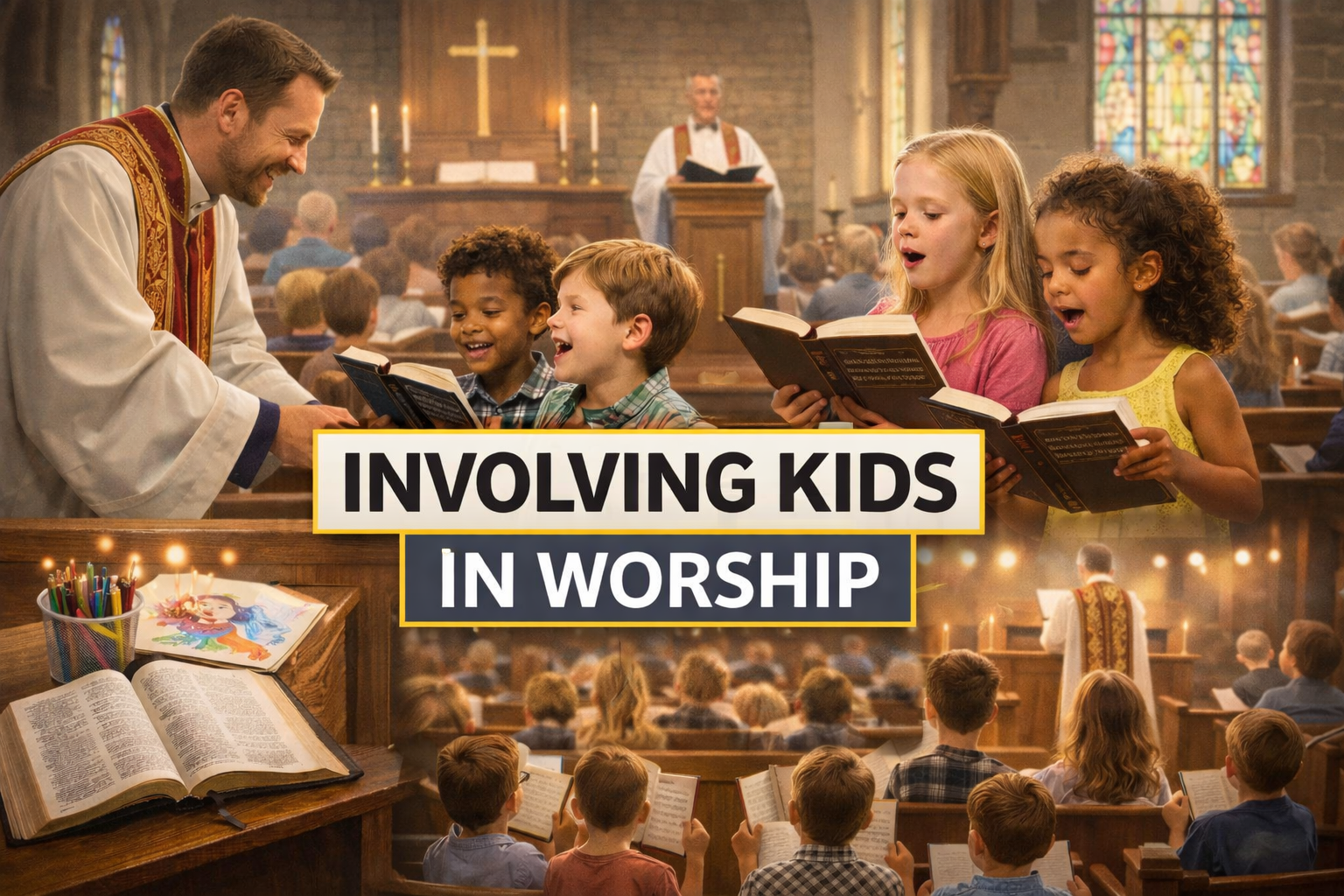
Why Do So Many Churches Remove Children from Worship?
This should not come as a shock, but the removal of children from worship is not rooted in historic Christianity. It is, in its entirety, a product of modern assumptions in the church, most of which are borrowed more from secular culture than from Scripture.

Isaiah 26:3: Thou Wilt Keep Him in Perfect Peace
We are reminded that although we will face times of discouragement, doubt, and despair we are kept in perfect peace by our perfect Savior.
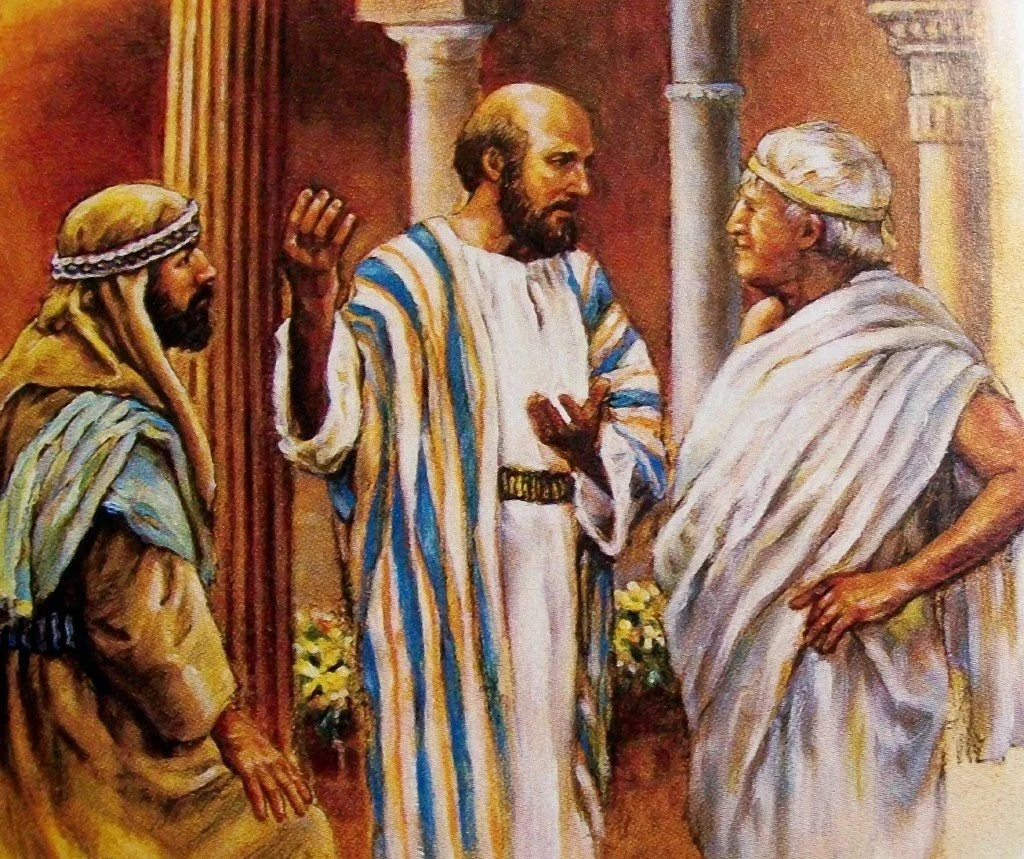
Conflict Between Paul and Barnabas: Lessons for the Church
This means we interpret narrative through the lens of Scripture’s clear ethical teaching. The Bible provides abundant instruction about unity, forgiveness, patience, and reconciliation among believers. Those explicit commands become the standard by which we evaluate the behavior described in historical narratives.

Easter 2026
In the days that followed Palm Sunday, Christ would confront the disgusting corruption of Israel. He would cleanse the temple of idolatry by overturning the tables of the money-changers and the seats of those who sold pigeons for sacrifice. He would expose the hypocrisy of the religious leaders by denying their legitimacy,

Doug Wilson's Covenant Confusion: A Biblical Critique of Heretical Doublespeak
At the heart of Wilson's thesis is the claim that unbelieving Jews remain connected to Abraham covenantally, albeit in a negative, distorted form. In his AmeriFest remarks, he stated: "If these people covenanted with the God of Abraham in the Middle Ages and they’ve been living that way for centuries, then they’re in covenant, they’re in that covenant." Notice his words, which were deliberate and deceptive.

Why Conservative Churches Are Growing and What This Teaches Us
My bold and confident assertion is that certainty provides structure and form while transcendence provides oxygen and life. In our modern context, life is saturated with casualness. People wear sweat suits to important events and flip flops to church, when only 100 years ago, day laborers commonly wore full suits, including jackets, vests, and ties, to work.

How to Wash Your Wife in the Word (Ephesians 5:25): The Promises and Practices of Loving Her Like Christ
When it comes to the book of Ephesians, we can quickly, and often errantly, jump to the commands of chapters 4-6 without first being informed, equipped, challenged, and comforted with the works of Christ on our behalf that enable us to rise in obedience to the commands of chapters 4-6.

On Serving Tea With Two Sugars
N.T. Wright is an Anglican Bishop and a New Testament scholar. He is famous for saying many things, but the thing that he has said that has sparked this particular article is the following: “Wherever St Paul went, there was either a riot or a revival. Wherever I go, they serve tea.”

Christ Against All Unbelief: A Biblical View of the Current Jewish Conflict
The apostle Paul takes up the same theme with unmistakable clarity. For him, the children of Abraham are not those who share Abraham’s bloodline, but those who share his faith-line of Abraham. He writes that “those of faith are the sons of Abraham” (Galatians 3:7) and that “not all who are descended from Israel belong to Israel” (Romans 9:6).

Who Is My Neighbor?": Ordered Love, Covenant Priority, and Christian Duty
Who is my neighbor? Biblically speaking, your neighbor is not defined by universal sentiment, but by proximity, providence, and priority. God shows us the Ordo Amoris, not to make us intolerable jerks, but to actually provide true, heartfelt, compassionate care for people. Only when you are near someone can you actually care for them.

No-Fault Church Membership and the Soft Bigamy of Modern Evangelicalism
Scripture does not allow us to imagine covenantal relationships as disposable. Marriage, after all, is the great earthly icon of Christ’s unbreakable union with His Church (Eph. 5:31–32). God says plainly, “I hate divorce” (Mal. 2:16), not because every marriage is easy, but because covenant-breaking is violent.

Transfiguration Sunday
And we are indeed a people who need this reminder. We are so prone to judge by appearances. When we see weakness, we assume defeat. When we see suffering, we assume God is absent. But the Transfiguration teaches us that humiliation does not nullify glory. The cross will not revoke Christ’s kingship. The One who will be lifted up in shame is the same One whose face shines like the sun.

Are the Confessions Authoritative?
Faithful creeds, confessions, and quotes are doing the same work a preacher does; they are explaining, illustrating, and applying the authoritative Word of God. The difference in Scripture and the preacher, the creed, the confession, Charles Spurgeon, John Calvin, John MacArthur, Steven Stanley, and John Fry is that we can err, and the Scripture does not.
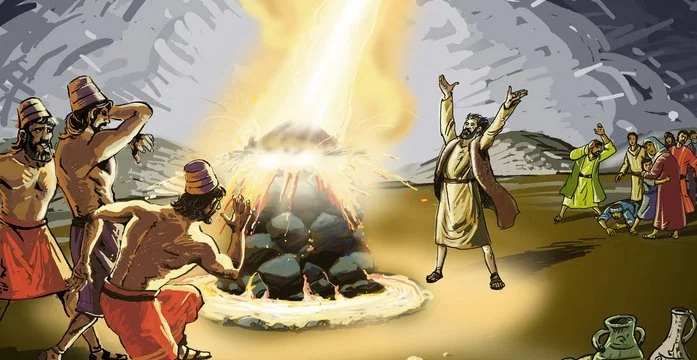
On Being A Troublemaker
Those who you would expect to be the most supportive seem to always find the most superficial and insignificant reasons to belittle and spurn the faithfulness of their prophets. These things should not be.