Which Text Has God Preserved? - Exploring the Byzantine and Alexandrian Texts of Scripture
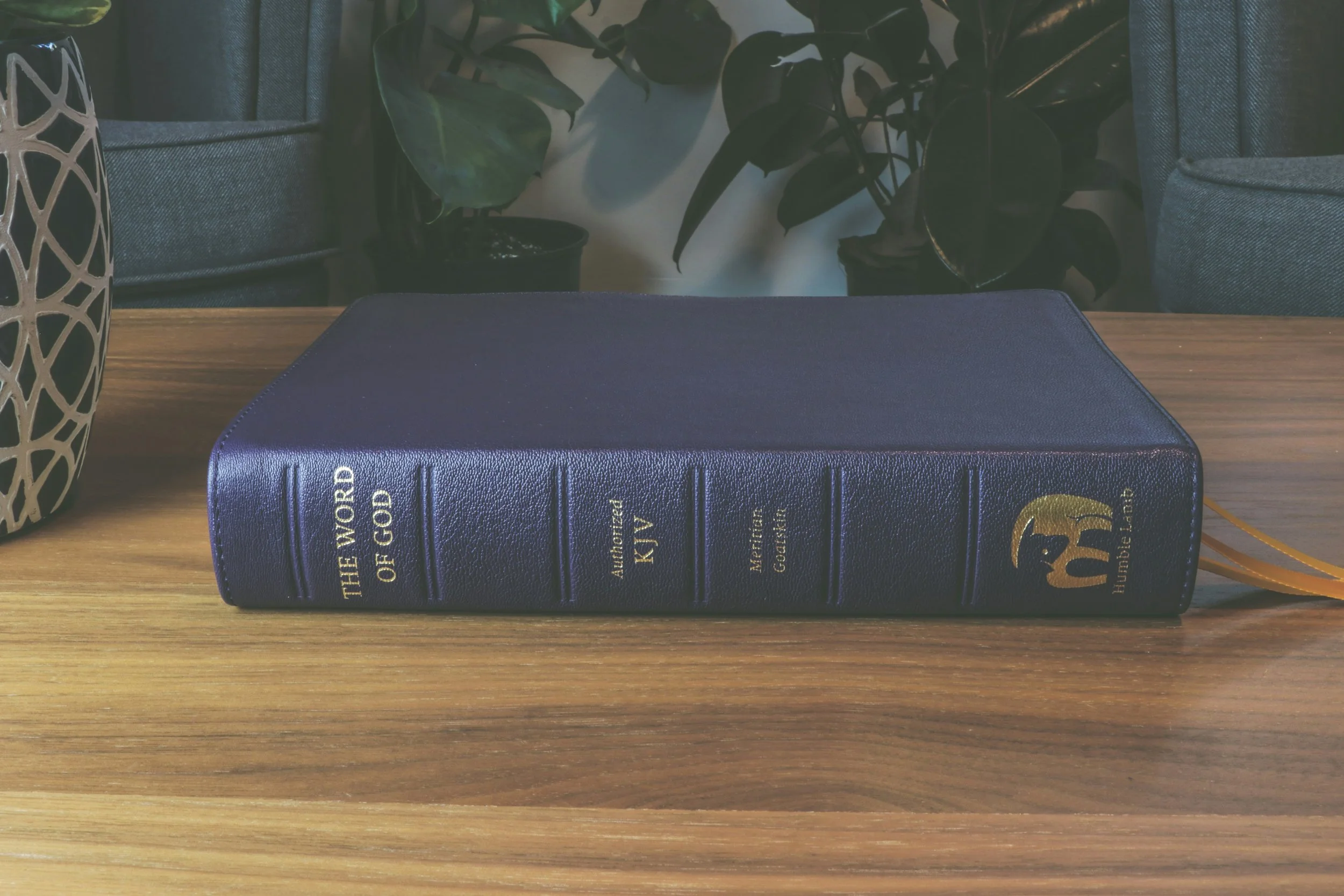
Few questions press closer to the nerve of biblical confidence than the question of the text itself. For centuries, Christians have confessed that “all Scripture is given by inspiration of God” (2 Tim. 3:16). Yet alongside that conviction lies another: that God, in His providence, has also preserved, in His Church, what He has inspired. How He has done so — and through which textual tradition this preservation is most clearly seen — remains a matter of ongoing discussion within the church.
At the center of this discussion stand two primary streams of Greek manuscripts: the Byzantine and the Alexandrian. Each tradition/strand represents not only a collection of ancient documents, but also a way of understanding how God has worked through history and through the church to preserve His Word.
This is not a debate limited to ivory-tower academics alone, although it does take place there. For pastors, translators, and believers who open their Bibles each morning to commune with the one true and living God, it raises a practical question: When I read the Scriptures, am I reading the very words penned by men moved about by the Holy Spirit—the apostles?
Overview of The Alexandrian Tradition
The Alexandrian text finds its roots in Egypt, particularly in the scholarly city of Alexandria. Among its chief representatives are two manuscripts of great antiquity: Codex Vaticanus (B) and Codex Sinaiticus (א), both dating from the fourth century. Because of their age, these manuscripts have carried immense weight in the modern field of textual criticism, shaping what we now call the Critical Text — the basis of most modern English translations such as the ESV, NIV, and NASB.
Advocates of this tradition reason that the earlier a manuscript was written, the closer it likely stands to the original writings, and the less corruption and error it contains. The Alexandrian text is typically shorter, crisper, and sometimes more abrupt in language. Its defenders see this as evidence of authenticity — a text unembellished by later scribes.
Critics, however, observe that age does not necessarily equal faithfulness. Some point out that these manuscripts, though ancient, were found in regions where the Scriptures may have been less widely used in public worship and more prone to private copying. The very fact that they survived could indicate they were not used as much, making their lack of use due to less trust placed in them.
Nevertheless, the Alexandrian manuscripts are a remarkable witness to the early church’s Scriptures, and their preservation through time is itself a testimony to providence.
Overview of The Byzantine Tradition
The Byzantine text, also known as the Majority Text or Traditional Text, represents the textual heritage of the Greek-speaking church centered in Byzantium (Constantinople). This family of manuscripts became the dominant form of the New Testament in the Christian East, and, by the Middle Ages, it was the dominant form in most of Christendom.
Unlike the Alexandrian family, the Byzantine tradition is supported by thousands of manuscripts — more than any other textual group. Because of this numerical majority (hence the title “majority text”), it has been regarded by many as the providentially preserved text of the church. This is the form of the Greek New Testament that undergirds the Textus Receptus, which was the text used by the Reformers and reflected in the King James Version and New King James Version.
The Byzantine text tends to read more smoothly and fully. Phrases such as “by every word of God” (Luke 4:4) or “through Jesus Christ our Lord” (Romans 6:11) appear consistently, even when omitted in Alexandrian manuscripts. Some scholars who favor the critical text see this as evidence of scribal expansion; other scholars view it as the faithful preservation of the original fullness of the text.
Two Views of Providence
Beneath the surface of the textual evidence, however, lie deeper theological assumptions — not simply about manuscripts, but about how God preserves His Word.
The modern critical approach (beginning in the 16th century), associated with the Alexandrian text, operates from the conviction that through careful comparison of manuscripts, scholars can reconstruct the most original text. This approach assumes that no single textual tradition has been perfectly preserved, but that the earliest and best readings must be sifted from a variety of sources. It is, in a sense, a work of restoration — attempting to piece together a text that once was whole, but has since suffered the wear of transmission.
The Byzantine perspective, on the other hand, views the matter through the lens of divine preservation within the life of the church. Rather than needing to be restored by modern scholars and scholarship, the text of Scripture is believed to have been preserved through continual use. Through preaching, copying, memorizing, and public reading in the worship of God’s people, the text has been faithfully carried through the ages. Here, providence is not seen as something hidden underground or in caves, but as the active work of God the visible history of the church through the recognition of his Spirit indwelled peopel.
Both perspectives, in their best forms, do certainly arise from a reverence for the Word of God. The question is not whether God has preserved His Word, but more so how He has done so.
The Fruit of Each Tradition
The Critical Text has given rise to many modern translations that seek accuracy through rigorous manuscript comparison. On the other hand, the Byzantine tradition has given the church centuries of liturgical and pastoral continuity. It is the text from which the Reformation Bibles arose, the text preached in Geneva, Wittenberg, and Edinburgh. Its fruit has been stability — the assurance of a received and trusted Word.
Both have strengths; both reflect different ways of understanding how the Lord has governed the transmission of His word..
Toward an Honest and Faithful Inquiry
Perhaps the question is not merely which text is older or which is more numerous, but how God intended His church to receive His Word. Did he intend to preserve it primarily through scholarly reconstruction, allowing it to fall into subtle corruption over time? Or has he seen fit to preserve it through the organic use of His church over the course of several hundreds of years?
I don’t believe it is necessary that the thoughtful Christian rush to answer this quesiton. The issue is complex, involving history, theology, and even devotion. But what we must affirm with certainty is that God has not left His Word uncertain. Both traditions testify with remarkable unity to the message of redemption in Christ, without ambiguity. The differences, though real, are minor in comparison to the overwhelming agreement among the manuscripts.
The church’s task, then, is not to despair at the existence of variants, but to give thanks that in the midst of human weakness, God’s truth endures, and will continue to endure till the end of time.
“The grass withereth, the flower fadeth: but the word of our God shall stand for ever.”
— Isaiah 40:8
Conclusion: A Humble Confidence
This article is an attempt to put my own thoughts down so that I may think through the issues, and it just so happens that I’m bringing you along with me. It may be that the Lord, in His wisdom, has allowed both the Alexandrian and Byzantine traditions to survive so that His people might learn humility — that we might labor to know the text, but also rest in His preservation. It might be that these two traditions exist as a way to get even closer to the truth than would otherwise be possible.
Whether one reads from a Byzantine-based translation or a Critical Text edition, the same Christ speaks, the same gospel saves, and the same Spirit illumines. Still, for those who love the Word deeply, the question remains and is worthy of patient study.
How has God preserved His Word? Through the widespread, time-tested text of the believing church? Through the ancient, carefully reconstructed readings of early witnesses? Or, perhaps, through both in different ways, each testifying to His faithfulness?
We may not yet have all the answers (although I am certain in time I will be compelled one way or the other). But, regardless, we can trust the God who does.
“Forever, O LORD, thy word is settled in heaven.”
— Psalm 119:89