Race & The Gospel: A Response To Toby Sumpter
Introduction
Before I begin, I want to explain why I feel compelled to interact with Toby Sumpter’s sermon at all. I do not write as an enemy throwing stones from a distance. I write as someone who genuinely appreciates Toby Sumpter and the broader work coming out of Moscow over the years. I believe these men have done, and continue to do, much good for the Church. Much of their labor has been Christ-exalting, kingdom-advancing, and courageously countercultural in an age that desperately needs bold Christian witness, and because I respect much of what they do, I cannot remain silent where I believe serious sin is harming the Church. Scripture teaches us that faithful wounds are the wounds of a friend (Prov. 27:6). Flattery is easy. Silence is easy. But genuine love for Christ’s people requires honesty, even when that honesty is uncomfortable.
The stakes here are not personal irritation, tribal rivalry, or internet controversy. The issue is whether certain patterns of speech and behavior are fostering unnecessary division, suspicion, and damage within Christ’s body. When influential men speak carelessly or sinfully, the effects rarely remain isolated. Their words shape cultures, attitudes, and communities.
So what follows is not written out of bitterness, nor from a desire to score points, but from a sincere concern for the peace, purity, and unity of the Church. I write this as a brother who believes correction among Christians should not be viewed as betrayal, but as an act of covenant faithfulness.
The Sermon
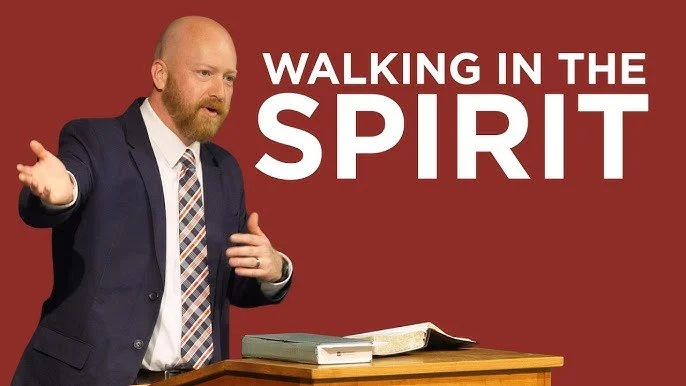
I really do not have the time to provide a thorough overview of Toby’s sermon (you can read it here or listen to is here), but a brief summary will suffice for the purpose of this interaction. At its core, Pastor Toby’s sermon is a call for Christians to stand firmly upon Scripture against the manipulative guilt tactics of modern woke ideology, while also refusing to swing into the opposite ditch of bitterness, resentment, or reactionary hatred. In principle, this is both necessary and commendable.
Christian men, particularly white Christian men in the current cultural climate, should not be browbeaten into self-loathing. They should not be taught to despise their ancestry, their fathers, their heritage, or their children. It is not sinful to be white. It is not sinful to love your people, your history, your culture, or to rejoice in the blessing of white children. Christians should never surrender to the cultural Marxist framework that treats inherited identity itself as a moral stain.
Toby’s central warning is that sustained hostility inevitably creates temptation. When young Christian men are constantly maligned as “racist,” “sexist,” or “antisemitic” merely for rejecting progressive dogmas, there is a real danger that some of them will eventually become hardened, cynical, and resentful. A man falsely accused long enough may eventually begin embracing the accusations themselves, not because they were true to begin with, but because bitterness begins to feel like strength. The temptation is to move from rejecting false guilt to cultivating sinful hatred. He is warning Christians not to allow the lies and hostility of the modern Left to push them into partiality, ethnic animosity, or fleshly resentment. That concern, in and of itself, is a good and necessary concern.
The Problem at Hand
The general principle of Toby’s sermon is good and deeply needed in our current cultural moment. Christians must reject both the manipulative guilt of woke ideology and the sinful temptation toward resentment or reactionary hatred. That exhortation is biblical and necessary.
The problem, however, is that Toby often paints with such a broad brush that important distinctions begin to collapse. In warning against genuine ethnic animosity, he speaks so generally about online rhetoric and certain streams of dissident Christianity that faithful and godly men can easily be swept into the same category as actual sin. The result is that serious Christian brothers and churches—many of whom equally reject woke ideology and affirm biblical justice—are subtly placed under suspicion simply because they differ from Moscow on matters of tone, strategy, rhetoric, or public posture.
For example, when Toby speaks critically about terms like “race realism,” anyone familiar with current debates in Reformed and conservative Christian circles immediately recognizes that men like Joel Webbon have publicly used that terminology. Whether intentional or not, an association is formed in the listener’s mind: “Pastor Toby says resentful and hateful men hide behind phrases like ‘race realism.’ Joel Webbon uses that phrase. Therefore Joel Webbon must be one of the men Toby is warning us about.”
To be fair, Toby never explicitly says this. He does not directly accuse Joel Webbon of racial hatred. But communication is not limited to explicit statements alone. Context matters. Existing tensions matter. Public associations matter. Given the very visible friction between the Moscow camp and men like Joel Webbon, listeners naturally connect the dots even when names remain unspoken.
The same dynamic appears when Toby critiques men who supposedly cloak sinful resentment under phrases like “we’re just noticing.” Again, anyone familiar with these conversations knows that this language has been associated with men like Brian Sauvé and others who openly discuss crime statistics, cultural dysfunction, and societal decline. So the audience quietly absorbs the implication: these men are not merely making observations; they are driven by sinful resentment.
And this is where the issue becomes serious. There is a profound difference between rebuking actual partiality and insinuating sinful motives. If a man truly advocates ethnic hatred, then rebuke him plainly and directly. Name the podcaster, quote him, expose the meme you are talking about etc. But if faithful Christian brothers are treated as morally suspect simply because they discuss uncomfortable realities or employ controversial terminology, then we have drifted into guilt by association.
This is why I believe Proverbs 16:28 is relevant here: “A dishonest man spreads strife, and a whisperer separates close friends.” The “whisperer” in Proverbs is not someone who tells outright lies. He is someone who subtly circulates suspicions, implications, and corrosive suggestions that fracture trust between brothers. The emphasis of the proverb is not only on factual falsehood, but on the relational destruction caused by suggestive speech.
That concern applies here. Toby does not directly say, “Joel Webbon is hateful,” or “Brian Sauvé is racist.” Yet by repeatedly describing sinful and fleshly men using language strongly associated with particular individuals and ministries, suspicion is cultivated without the burden of making a clear accusation.
Scripture warns not only against blatant falsehood, but against speech that sows unnecessary discord among brothers. Proverbs 6:16–19 lists among the things God hates “one who sows discord among brothers.” Proverbs 26:20 likewise says, “Where there is no whisperer, quarreling ceases.” The whisperer often works indirectly through framing, implication, and suggestion rather than formal accusation.
This is why pastors and influential voices must exercise extraordinary care in public rhetoric. Shepherds shape the instincts of their people. If they repeatedly connect unnamed brothers to categories like “resentful,” “reactionary,” or “hateful” while using language commonly associated with specific men and ministries, listeners inevitably begin suspecting those men without ever hearing a careful biblical case made against them.
None of this means pastors should avoid rebuking real sin, or stop using good generalizations. Scripture commands shepherds to warn against genuine error and confront actual partiality, and generalizations are used to do it. Paul himself publicly named false teachers when necessary, and he called entire people groups sinful. But biblical rebuke is ordinarily marked by clarity, precision, and evidence. Charges should be substantiated, not implied through rhetorical association.
Otherwise, what emerges is a kind of soft insinuation that damages reputations while preserving plausible deniability. And that is precisely why Scripture treats whispering and strife-making so seriously. Sinful division is not created only through direct lies, but also through suggestive speech that quietly teaches Christians to distrust one another without sufficient cause.
Conclusion: What Is Really Going On
If I were to make an educated guess, I believe the real disagreement between Moscow and men associated with Ogden or the broader New Christian Right is not primarily over explicit sin, but over strategy, posture, and optics. And that distinction matters. There is a significant difference between sin and disagreement over prudence. There is a difference between genuine partiality and differing assessments of cultural engagement. There is a difference between hatred and simply refusing to adopt the rhetorical sensitivities demanded by modern evangelical respectability politics.
Many faithful Christians believe the Moscow camp often overstates the danger of “optics” in a way that unintentionally grants too much interpretive authority to hostile outsiders. Others worry that an excessive concern for public perception can become functionally paralyzing, causing Christians to spend more time distancing themselves from accusations than boldly speaking truth. Those are legitimate intramural disagreements among brothers. They are not, in themselves, evidence of hidden racial animus or sinful resentment.
But because Toby’s categories are often so expansive, the distinctions can become blurred. Men who simply disagree with Moscow’s tactical instincts may begin feeling as though they are being subtly grouped together with racists, or bitter reactionaries. And once that happens, the discussion shifts away from addressing actual sin and toward managing perceptions, avoiding associations, and proving one’s innocence against implications never formally stated.
That is not healthy for the Church. Faithful Christians should be able to disagree about rhetoric, strategy, aesthetics, and cultural engagement without immediately being placed under a cloud of suspicion. And ironically, Moscow of all people should understand this dynamic. For years, they themselves have been accused of being unnecessarily provocative, abrasive, combative, or “too edgy” by mainstream evangelicalism. Yet rather than capitulating to those criticisms, they often defended the legitimacy of sharp rhetoric in the service of truth. Douglas Wilson famously embraced the phrase “theology that bites back,” and even wrote The Serrated Edge defending the proper use of satire, mockery, and biting polemics in Christian discourse.
That history makes the current situation especially unfortunate. The very men who rightly resisted being unfairly caricatured by evangelical gatekeepers now risk caricaturing other conservative Christian brothers through broad and imprecise associations. And the danger of that approach is ecclesiastical disunity. It breeds suspicion where there should be charity, distance where there should be fraternity, and defensive posturing where there should be principled disagreement among allies.
If we are not careful, we will end up dividing men who, in reality, stand shoulder to shoulder on the central truths of the Christian faith and in opposition to the same anti-Christian forces consuming the modern world. The Church desperately needs courage right now, but it also needs clarity, fairness, and brotherly charity. We must not allow vague insinuation and guilt by association to fracture relationships among Christians who are, despite their differences, laboring for the same King and the same Kingdom.