Transfiguration Sunday
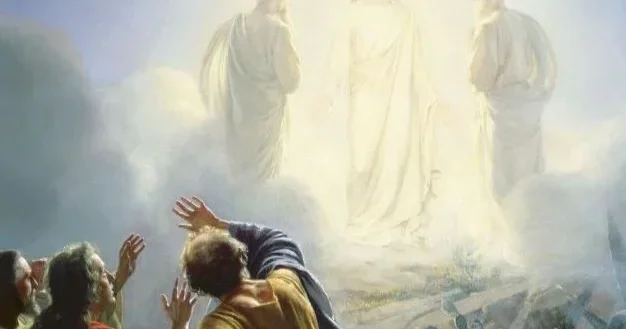
The Transfiguration of our Lord Jesus Christ is one of those sacred moments when heaven draws back its veil and allows earth to see what has always been true. Jesus takes Peter, James, and John up a high mountain, and there He is transfigured before them. His face shines like the sun. His garments become white as light. For a brief and holy moment, the glory that was always His breaks forth in visible splendor to naked eyes. And we must understand this: Christ does not become glorious at that moment on the mountain. Instead, he reveals the glory that has eternally been His. The One who grew weary on dusty roads, who hungered and wept, the one who would soon be betrayed and crucified, is none other than the eternal Son of God, holy, majestic, and righteous. The mountain does not make Him divine; it unveils what the manger concealed and what the cross will seem to contradict.
And we are indeed a people who need this reminder. We are so prone to judge by appearances. When we see weakness, we assume defeat. When we see suffering, we assume God is absent. But the Transfiguration teaches us that humiliation does not nullify glory. The cross will not revoke Christ’s kingship. The One who will be lifted up in shame is the same One whose face shines like the sun.
Then Moses and Elijah appear, speaking with Him. The Law and the Prophets stand beside Christ, not as equals, but as witnesses. All of Scripture has been pointing to this moment. The Law was preparatorya and the Prophets were anticipatory for this very time. From the beginning, there has been one unfolding plan of redemption, one covenant of grace, one Mediator between God and man. And here He stands. Christ is not an addition to the story; He is its center of that story - the fulcrum.
Peter, overwhelmed, suggests building tents, wanting to preserve the moment. How like us. We long for mountaintop experiences. We want the feels. We want the aesthetics. We want glory without the valley, crowns without crosses. But while Peter is still speaking, a bright cloud overshadows them, and the Father’s voice declares, “This is My beloved Son, with whom I am well pleased; listen to Him” which is the heart of the passage. Listen to Him, the voice says. This means we are to listen to Christ not our impulses. Not to our fear. Not even to the fading voices of the past. We are to listen to the Son and him only.
And in that moment, what had the Son just said? He has spoken of His coming suffering and death. The Father does not interrupt to redirect away from the cross, but to anchor the disciples to the One who will walk into it. The Transfiguration is not an escape from suffering; it is preparation for suffering. The disciples must know who He is before they see what will be done to Him so they may know the effectiveness of wha the will do.
Beloved, we also must remember the mountain when we walk through valleys. When obedience is costly, when faithfulness brings reproach, when Christ’s church appears weak, we must remember who He is. The One we follow is the beloved Son of the Father. His kingdom is certain. His cross is victory. His promises are sure.
At the end of it all, the disciples lift their eyes and see no one but Jesus standing there. Moses fades. Elijah disappears. The cloud lifts. Only Jesus remains. This is the Christian life in its essence: Jesus only. Not Christ plus comfort. Not Christ plus cultural approval. Christ alone, before all things and after all things. We do not live every day in visible glory. Most of life is ordinary, sometimes painful, often hidden. But we live by faith in the One whose glory has been revealed. And one day, that glory will no longer be veiled. The transfigured Lord will return in unmistakable majesty.
Until that day, hear Him in his word. Trust Him in your heart. Follow Him in your life. For the crucified One is the glorified Son, and the glorified Son is the coming King. Amen.